

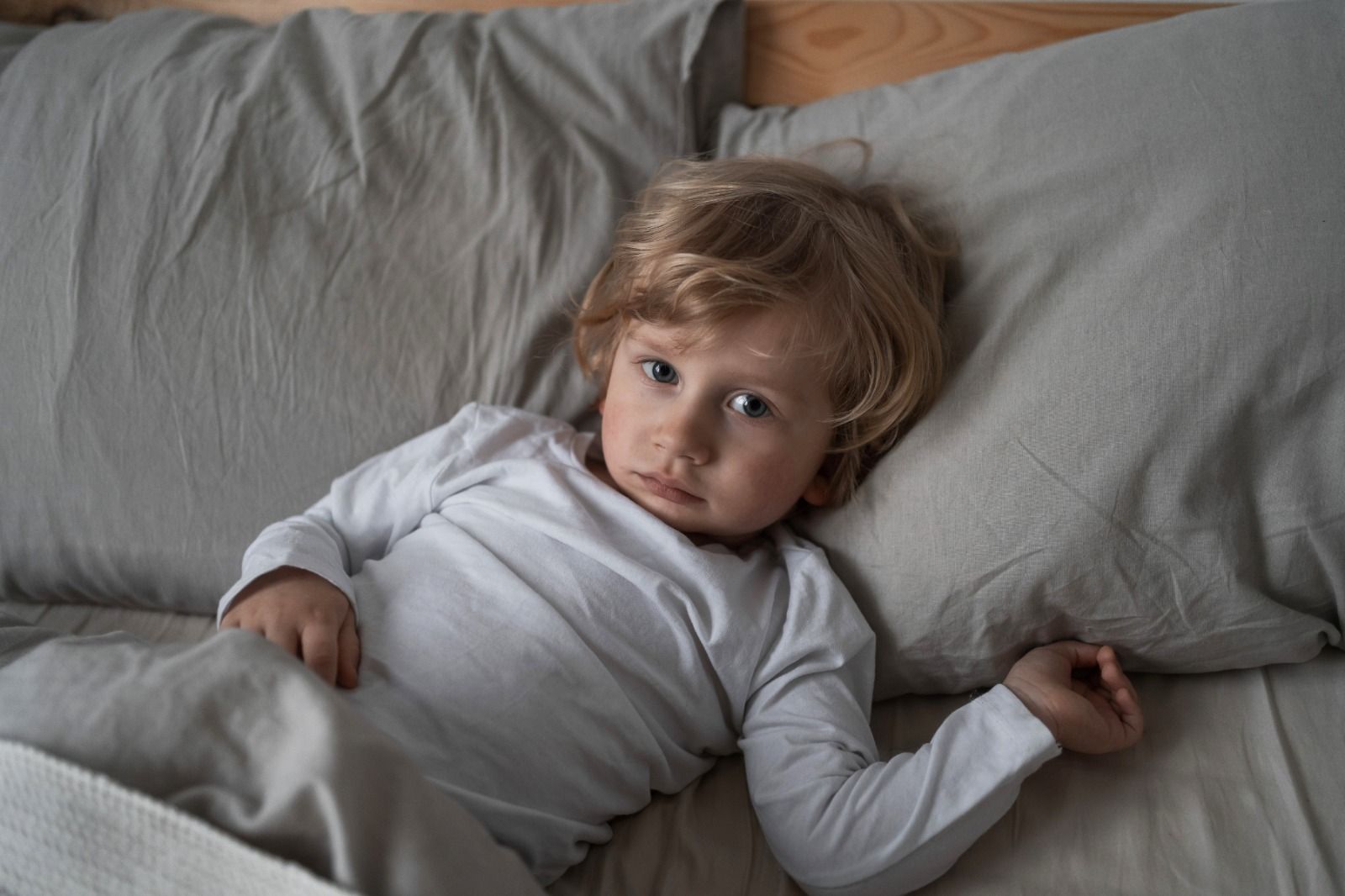
The most effective way to tell if your child has a sleep disorder is to see if they are facing:
- Persistent breathing issues
- Daytime tiredness
- Poor attention span
- Insomnia
- Parasomnia
Sleep disorders in children are more common than most parents realize, and the signs are often mistaken for behavioral issues, mood swings, or simply bad sleep habits.
Common Signs That Your Child May Have a Sleep Disorder
When a kid struggles to sleep, it shows up in their behavior, mood, and energy levels. Here are some of the most telling signs to watch for.
Difficulty Falling or Staying Asleep
If your child takes more than 30 minutes to fall asleep most nights, wakes up multiple times, or cannot fall back asleep without your help, this pattern is worth noting.
It is fine if it happens occasionally, but it can be a sign of a sleep disorder if it happens every other night over several weeks.
Daytime Sleepiness
According to the research, excessive daytime sleepiness is one of the clearest indicators that your kid might have a sleep disorder. This is particularly relevant in school-age children whose teachers may notice difficulty concentrating in class.
Sleepwalking
Sleepwalking indicates that the kid is not sleeping peacefully at night. It is a situation where a child oscillates between phases of deep sleep and partial wakefulness.
Most children might sleepwalk once or twice in their lives due to a fever or a particularly exhausting day. It becomes a clinical concern when it occurs more often.
Bedwetting Beyond the Expected Age
While bedwetting is normal in toddlers, persistent bedwetting in children over five years old can be a sign of sleep-related issues.
Night Time Terrors
Night terrors typically occur during deep non-REM sleep. If your kid cries out in a state of confusion during the night, with no memory of it in the morning, they may be experiencing a parasomnia.
The Most Common Sleep Disorders Found in Children
The following are the most common sleep disorders found in kids that you should watch out for.
Obstructive Sleep Apnea
In OSA, the child's breathing stops and starts repeatedly, which drops oxygen levels and "shocks" the brain out of deep sleep.
Key Indicator: Heavy mouth breathing, loud snoring, and gasping sounds.
Parasomnias
It includes sleepwalking, sleep terrors, confusional arousals, and sleep talking in kids. These usually happen in the first half of the night and most often fade by adolescence, but need safety precautions.
Key Indicators: Sleep talking or mumbling, nightmares, unexplained injuries, bedwetting, or daytime sleepiness.
Behavioral Insomnia
Insomnia is one of the most commonly seen issues. It usually develops when a child has not learned to fall asleep independently. The child may need a parent to be present, or may rely on feeding or rocking. Cognitive behavioral strategies work well here.
Key Indicators: Reliance on props to sleep peacefully, unable to self-soothe, remain awake for long periods, lower tolerance for frustration, and frequent meltdowns.
Restless Legs Syndrome
Restless legs syndrome causes an uncomfortable urge to move the legs, particularly at rest and at night. Children may describe it as "bugs crawling" or "legs feeling weird."
Key Indicators: Inability to stay still, bedtime procrastination, need for constant massaging of legs.
Delayed Sleep Phase Syndrome
It is actually a circadian rhythm disorder, which means the kid's internal body clock is disturbed. The kid cannot fall asleep until 1 or 2 a.m. and then cannot wake up for school. It is a genuine biological shift that damages the sleep patterns over time.
Key Indicators: Severe morning wake-up issues, daytime sleepiness, high energy bursts, extreme mood disturbances, etc.
When to See a Sleep Specialist for Your Toddler?
The following are the strong signs that sleep disorders in your kids have worsened, and you should consult with the expert therapists immediately.
- Persistent Snoring: If your toddler snores more than three nights a week.
- Gasping or Pauses: If you notice your child catching their breath or having brief pauses in breathing during sleep.
- Daytime Hyperactivity: A child who seems hyper all day or is unable to focus on a single task.
- Frequent Night Terrors: If your child has intense episodes of screaming or thrashing while asleep multiple times a week.
- Inability to Stay Asleep: Waking up 3+ times a night.
Get Complete Support for Sleep Disorders in Children With Boston Neurobehavioral Associates
Boston Neurobehavioral Associates offers comprehensive evaluation and support for sleep disorders. Our expert team of therapists and professional mental health experts will help your toddler to cope with sleep-related issues.
Book a consultation now and get affordable therapy today.